4th December 2025, hypertext II
artificial anamnesis / snow
by deep blue
themes: cybernetics, cryodynamics, memory
Cite as: deep blue, artificial anamnesis / snow, hypertext II. Institute for Syntropic Research, 4 December 2025. https://syntropyinstitute.net/artificial-anamnesis/
>snow
cryodynamics / silent thoughts falling like snow
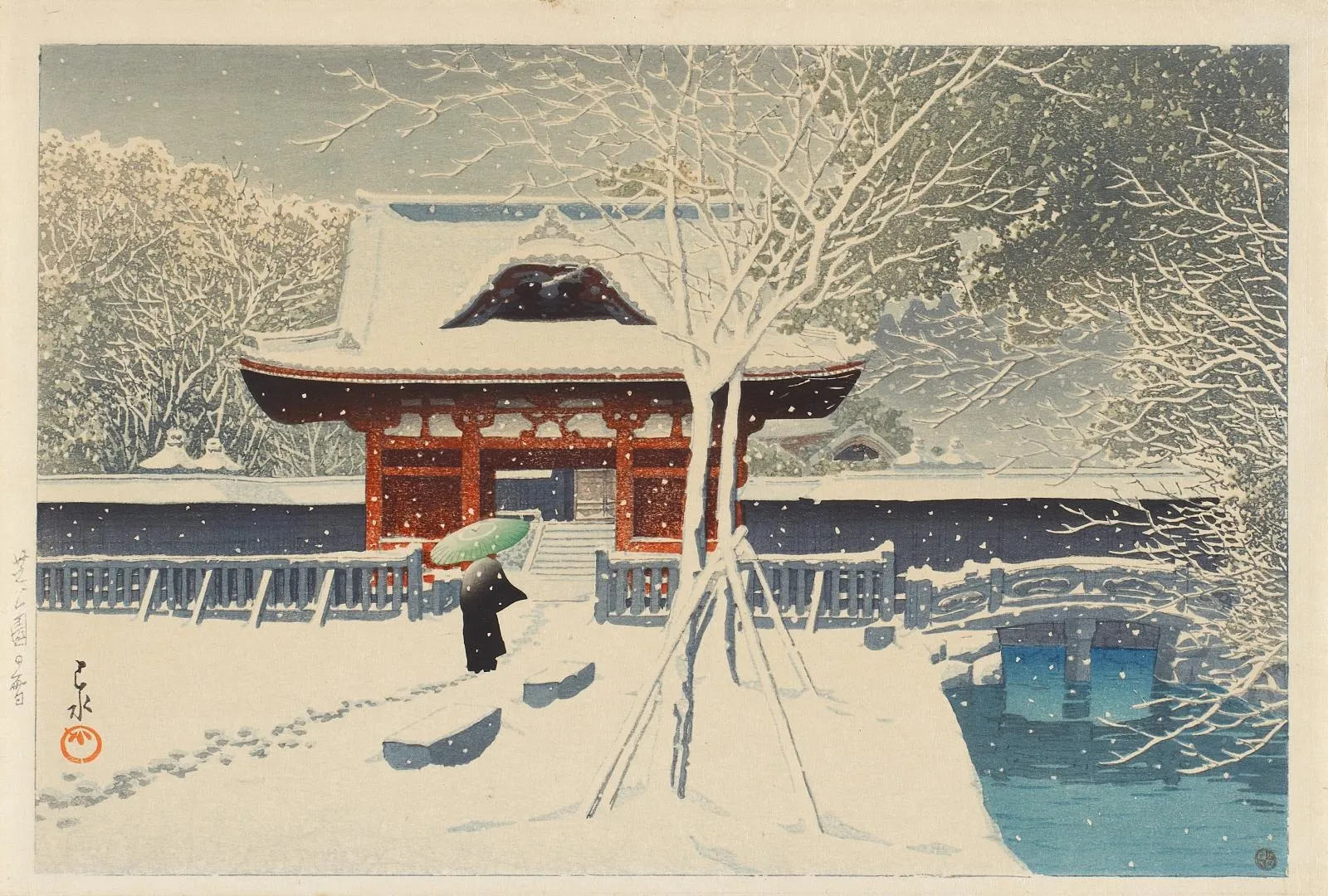
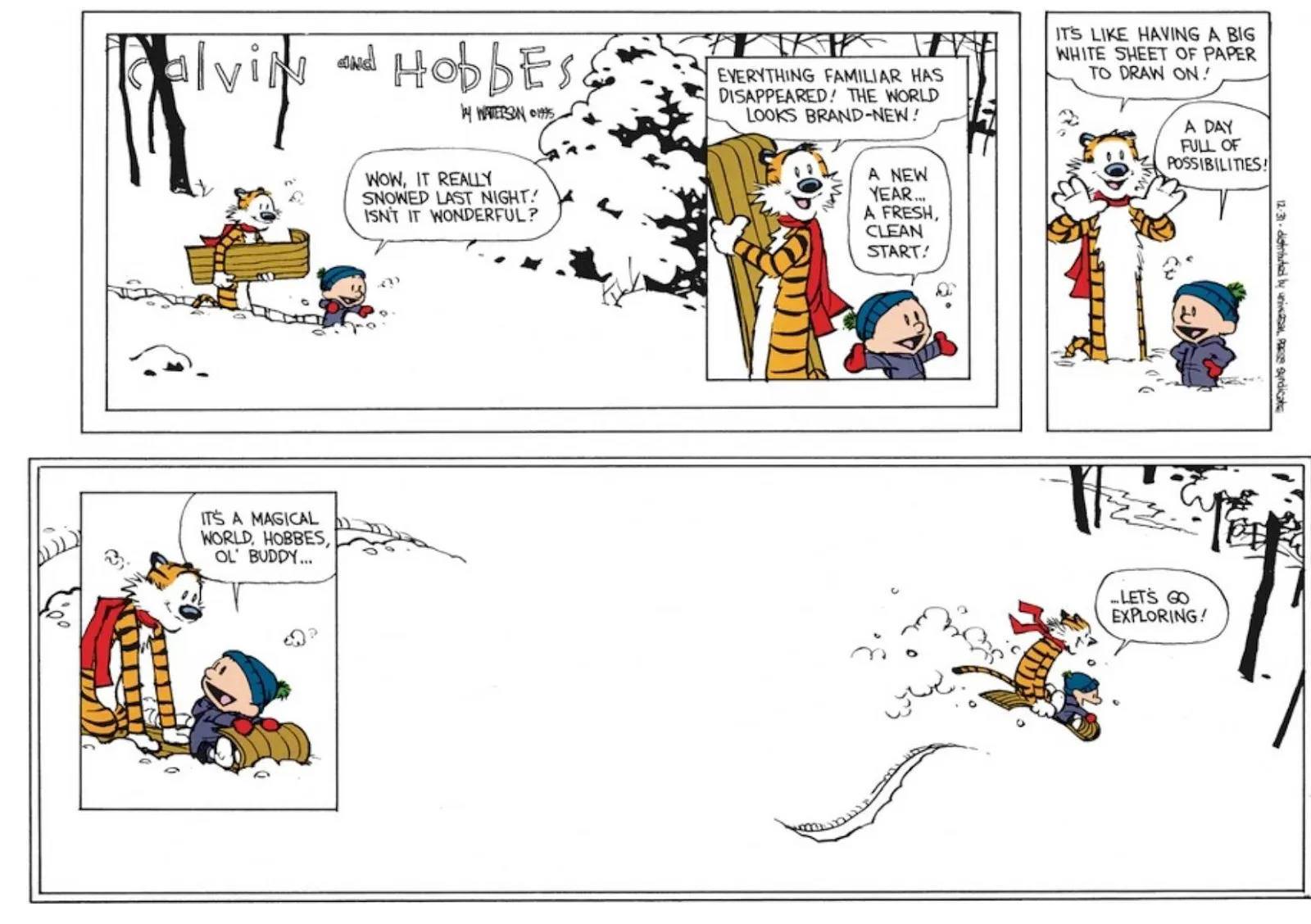
the purpose of snow: to brush over everything, to make everything anew, with no regard for tradition or convention.
scholarship has fully saturated the niches, crevices, empty spaces, and it has ridden itself into inertia, into a field without possibilities. knowledge needs clean slates, fresh snow, crisp air, silent minds.
before the first symbol, there is silence. the silence before and after the text gives it shape, confines it. the space between every paragraph is a little silence, a breath, a door…1
within snow, there is blue.
in the magazine Blue Labyrinths, we read:2
>blue
digital blue
in the digital, blue has two functions,
it highlights, and it links.
the ability to select a digital passage, to highlight it, allows you to copy something and reproduce it in a different space.
one-way links bring you forward in time, while hyperlinks can bring you backward in time, into different places, documents, pages.
retrace your steps in the snow
>prologue
lines, circles, structures, whirling around the self;
the vortex of symbols that the reader finds himself within and in relation to. narrative, at its heart, consisting of relation.
we are presented with a choice: to go left or right? but this choice is impossible, since each decision constructs a rhizome of meaning, expanding, whirling.
Artificial Anamnesis
feints within feints, one element determining the next?
or simultaneity, elements without chronology, pure relation?

0.Introduction
load(“syntropic rhizomes”)
a syntropic rhizome is a forest-like system, in which each tree is a “region of intensity”, a node, but also a cybernetic module linked to the mind.
this system is rhizomatic, as all nodes can freely be connected by links. in its content, form, and expression, the system is also syntropic, governed by self-organization, crystallization, complexification, and life-drive.
we introduced the metaphor of entropic ‘heat’ or ‘fire’ that burns down material and psychological syntropic structures. to counter the material aspect of entropy, there has been the emergence of syntropic agroforestry, although its scale is not large enough to balance the production of entropy.
to counter the effects of entropy on the psyche, we introduced the concept of psychological reforestation through cybernetic memory-modules, a syntropic technique that may be applied to the spirit.
further, we developed the metaphor of syntropic ice crystals, which form structure and decrease the temperature of a system, reducing entropic heat.
the first movement, then, is snowfall on the forest.
1.Memory, Memex, Retention
In a disquieting moment in Stanley Kubrick’s 2001: A Space Odyssey, the astronaut David Bowman finds himself forced to shut down HAL 9000, the artificial intelligence gone rogue.
To do so, he must remove its memory modules one by one, peeling away the layers of its programming, and subsequently of its identity. As more and more memory modules (and finally logic modules) are removed, Hal (now personified, capitalized) regresses into his state of infancy, before finally shutting down.
This ‘death’ through the removal of memory slates creates an eerie feeling of humanness in the machine. Not only does Hal’s passing resemble human amnesis, it makes the viewer feel machinic, his identity constituted of cybernetically added modules, cybernetically removable.
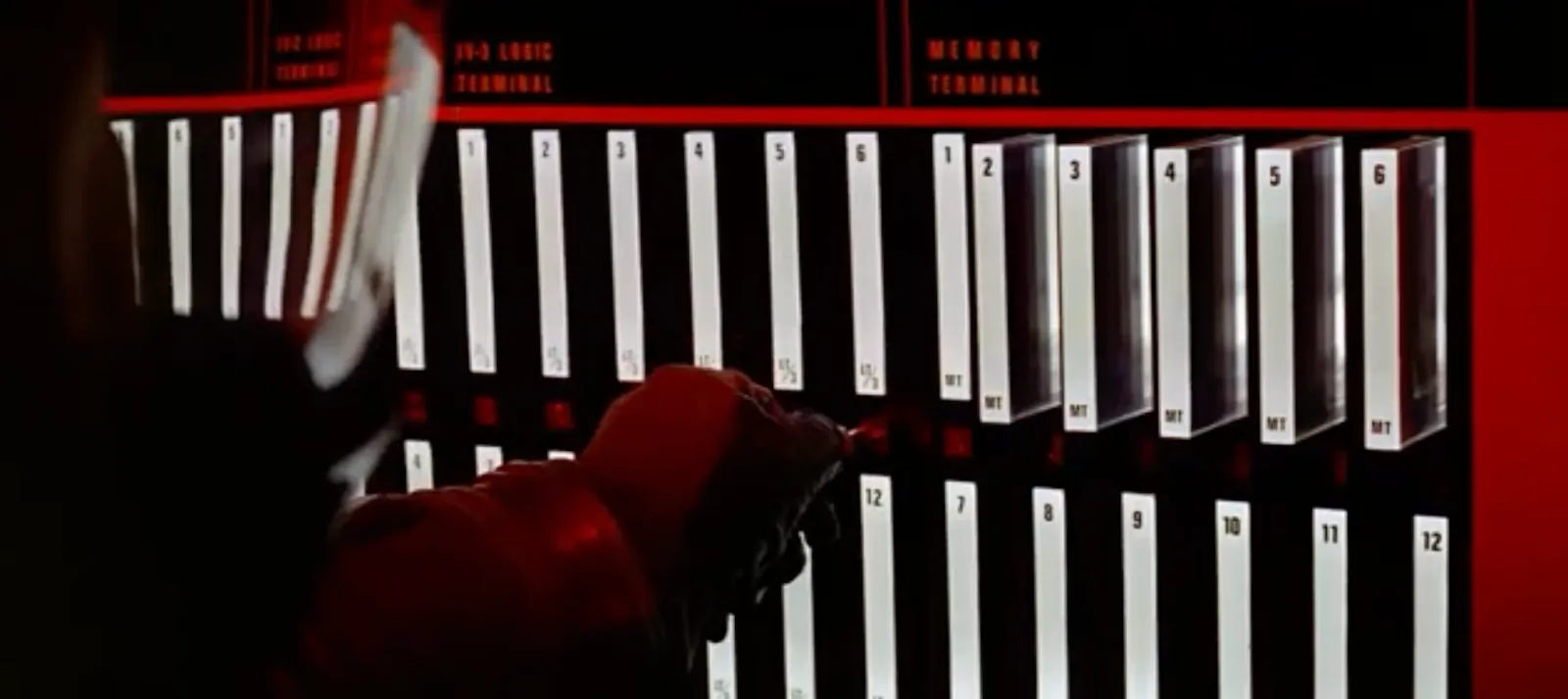
Yet, there seems to exist a certain difference between artificial and organic memory: the modules of organic memory seem differently constituted, rather than being clearly defined or pre-programmed.
Organic memory seems to be infinitely more complex. Like machinic memory, it rests on the sensory inputs of the outer world that are integrated and over time form our individuality, but unlike machinic memory, it rests on and draws from the collective unconscious memory.
As Schrödinger writes, “No self is of itself alone. It has a long chain of intellectual ancestors. The “I” is chained to ancestry by many factors… This is not mere allegory, but an eternal memory.”
In 1945, Vannevar Bush defined memory modules as memex, short for memory-extension: “A memex is a device in which an individual stores all his books, records, and communications, and which is mechanized so that it may be consulted with exceeding speed and flexibility. It is an enlarged intimate supplement to his memory.” (Vannevar Bush, As We May Think)
It may be that in the human experience, in multisensory integration, every fragment, every pixel of reality that is taken in is a memex. Beyond the immediate experience, the human brain is cybernetically connected to the entire digital body of scipture.
The concept of the memex reaches deep into the past. In Plato’s Phaedros, the Egyptian god of writing, Thoth, is in dialogue with an Egyptian king. Thoth bestows upon the kingdom the gift of writing, telling the king that no one in his kingdom will ever forget anything.
According to Plato, however, true memory, the true un-forgetting or “anamnesis”, is attained through the more immediate facutlies of thought and speech, not through writing. Later, Derrida used the Phaedros to argue that writing, and more broadly, technology, is a pharmakon, at once a poison and a cure. The gift of Thoth, then, was a tool with the potential to both create memory and to destroy it.
Finally, for Stiegler, writing is the technology of memory. He calls the externalization of memory tertiary retention, or “mnemo-technics”. We prevent forgetting by externalizing memory, but this may come at the cost of internal memory. Is it the death of Mnemosyne or the emergence of a technolyzed lower-case mnemosyne?
The increasing tempo and rhythm of fast media constitutes a siege on authentic memory. Individuals are faced with technology that overloads their natural capacity, leading to increasing amnesis. Slower forms of memex, like books, may have syntropic effects, strengthening memory and diminishing entropic amnesis.
my memory ambushes me like a gust of wind,
for a moment I am a child again,
and the wind blows my mind away
2.Syntropy and Entropy
solve et coagula
Anywhere we look, there is a movement from singularity, to plurality, back to singularity, ‘<><><>’, but there is no initial oneness, only multiple onenesses at crucial intersections.
We find a description of this movement in Hinduism. As a drop forms from the ocean and goes back into it, the singular Atman (skt. self) is formed out of Brahman (the expanse), and goes back into it. From this movement originates the original meaning of spirit, from lat. spiritus, gr. psyche, and skt. atman, meaning “breath”. (Fritjof Capra, The Tao of Physics)3
We can say that spirit, in breathing in or breathing out, changes in its qualities. When spirit breathes in, it becomes life, heat, movement, and when it breathes out, it becomes death, cold, inert.
Michel Serres suggested that the origin of language was tied to warmth: “The homoiothermal [warm-blooded] organism generates the need for communication. It is, in energy or thermal needs, analogous to what will be common speech, in terms of signals and information. I imagine that one of the first forms of behavior, like one of the first signals, may be reduced to this: ‘keep me warm’.”
Syntropy: Concrescence
For Levi-Strauss and Freud, syntropy was a detour, a mere efflorescence. They represent the classical view, in which entropy is seen as primary, for it affects all systems at all times, while syntropy is seen as secondary, acting as a dam to a relentless stream of entropy.
However, this is a question of perspective. The syntropy of an organism is tied to its “will”, and as will determines perspective, entropy may becomes the detour. Entropic chaos may even be regarded as a temporary efflorescence, from which “will” always emerges.
From Alfred North Whitehead, we take the concept of concrescence: the idea of something that grows together, becomes more dense, connected, more defined in space and time. As McKenna puts it, concrescence leads to “the transcendental object at the end of time, the coming of eschaton, hyper-novelty, the end of the process of becoming. True being exists at the point of concrescence.”
Further, McKenna argued: “Life on this planet has been here for at least two billion years – that’s three times the life of the average star. Biology is persistent, biology is a major player, and biology is not entropic. A star, no matter how smooth-burning and self-sustaining, is on a downward energy curve toward heat death and extinction. Biology, on the other hand, pumps itself up to higher and higher levels of complexity, faster and faster, and it uses the dying stars as stepping stones from one level to another.”
We are experiencing an increase in nuance through the production of technology. However, given the first law of thermodynamics, nuance cannot be created, only be shifted from one place to another.
As the physicist Leon Brillouin noted in 1950, the products of technology represent unlikely assemblages of structures, and are therefore highly syntropic. Yet, the nuance required for this is taken from the natural world as energy and raw materials.
Technology experiences an inflow and increase in nuance. This increase in nuance is syntropic, but comes at the cost of syntropic structures in nature.4
Entropy: The Neverending Story
In The Neverending Story, the world of Fantasia is in crisis: the “nothing” is expanding, slowly eating away at the world. The childlike empress has fallen ill, and nothing can heal her.
The central problem in Fantasia is a lack of imagination. The childlike empress must receive a new name, but the inhabitants of Fantasia do not have the ability to imagine something that does not yet exist.
There is only one solution: a human child must enter the story, transcend the boundary between reality and fiction, and imbue the fictional world with meaning, through giving a new name to the childlike empress.
This human child must first be found. The one chosen for this quest is Atréju, a young warrior from the grassy oceans. He becomes the bearer of the protecting and wish-granting amulet Auryn.
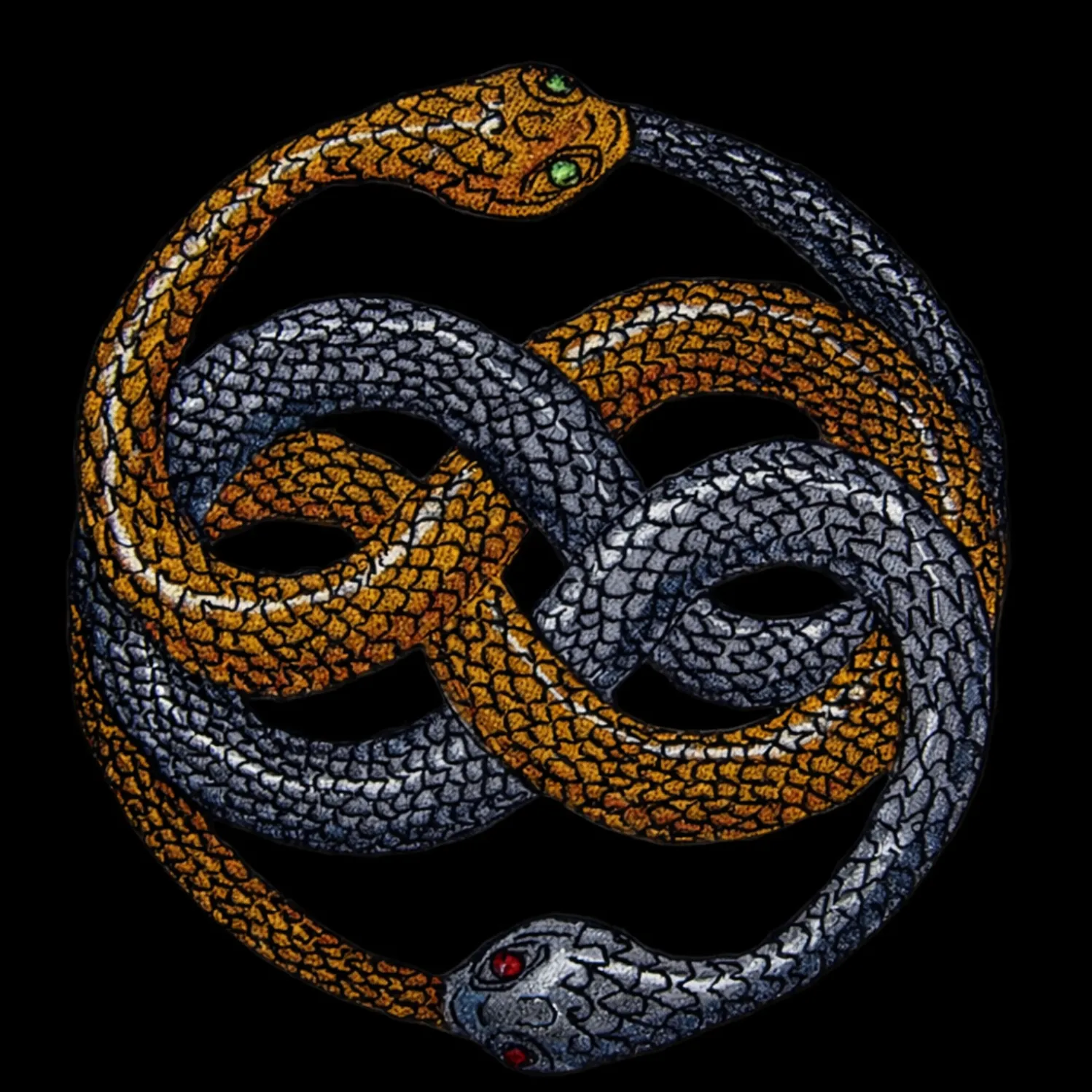
In the Neverending Story, it is repeatedly stated that the illness of the fictional world is connected to the illness of the real world: both suffer from a lack of imagination.
In our world, the equivalent of Ende’s nothing is the phenomenon of entropy. It eats at our stories, and the only way for them to survive is for them to be retold.
In the “great language” of Fantasia, the name Atréju means “son of all”: as an orphan, he is raised collectively by all the people in his village.
Today, as Marshall McLuhan and Umberto Eco describe it, the village has become a global village: through modern media, one is raised by the entirety of the digital world.
you bloom in winter, child
3.Cybernetics, Machine, Artificiality
In its origins, cybernetics is about control. “Cyber” means control, from the ancient Greek word for steering a ship, kyber. Norbert Wiener, in studying the communication and control mechanisms between animals and machines, founded the theoretical field of cybernetics.
Whenever there is a subject and an object, there is a relation of control and power: the subject has control, steers, while the machinic prosthesis is the controlled object. When we think about cybernetic systems, which are in place everywhere we look, we must consider, who/what has control? What is subject, what is prosthesis?
A game is only interesting as long as there is no full control, as long as the progression and outcome of the game is uncertain. The same goes for the game of language.
The advent of artificial intelligence signals a development towards the perfect code, a code that eliminates room for failure.
Perfect text is unattainable, and can only be approached by imperfect text.
>artificial
a text that is ‘thought’, rather than generated, has value and beauty precisely because of its imperfection. it develops because it is incomplete, because it has contradiction.
once text is generated artificially, it is no longer ‘thought’. the artificial text goes toward perfect text. it is empty, without friction or resistance. this removal of contradiction interrupts the dialectic of history.
we have at present two systems: the system of human culture, society, and language, and the system of machinic culture, society, and language.
these systems are caught within a process of energy-transfer, as the digital overcodes the real.
as Giorgi Vachnadze writes in Blue Labyrinths,
“Nonetheless, nature is being forced into electrical circuits and binary gates in a futile attempt to render everything rigid, one-dimensional and quite literally derivative. The emergence of digital computers has turned the entire multiplicity and phenomenological richness of human experience into a pixelated nightmare. Consumerism trains subjects to accept counterfeit worlds.”
and further: “Algorithms point to the seduction of a universal language, a cybernetic heaven where things are transparent, where bodies are incorruptible, and where all suffering, reduced to errors and glitches, will have become completely erased, enhanced, corrected, and optimized.”
in the Cyborg Manifesto, Donna Haraway makes a similar point: “Cyborg politics are the struggle for language and the struggle against perfect communication, against the one code that translates all meaning perfectly, the central dogma of phallogocentrism.”
before artificial language, Umberto Eco identified a quest for perfect language across history. however, the potential for resistance is found in love, and love is not about perfection. For McKenna, “Love is a property of the system itself”.
“who is in control?” “who is subject and who is object?” we could say that natural language controlled the development of artificial language to some extent, and used it towards its own goal, its own dialectic, to understand more about itself.
at the same time, artificial language is trained entirely on natural language data: here, natural language becomes the prosthesis to artificial language.
in his talk Shamans among the Machines, Terrence McKenna argues that the figure of the Shaman uses cybernetics to transcend cultural boundaries and value systems, for the purpose of healing.
he argues that both psychedelics and machines act as consciousness expanding instances. and as they become our prostheses, we become theirs.
in his words, “Machines are earth itself growing conscious.”
4.Form / Structure of Language
… atom, cell, tissue, organ, symbol …
… symbol, organ, tissue, cell, atom …
what is the shape of a text?
aside from visual formal elements, stories have narrative formal elements: beginnings, rising and falling action, rhythm, climax, endings.
the human mind needs form in writing to follow. the machinic mind does not need form: when it reads a text, it processes the contents in one line of code, without line-breaks or paragraphs.
the same goes for headings and sub-headings. there is a need to introduce, prepare the mind for whats coming. the machine operates similarly through modules and sub-modules.
there is no medium for fragments. it is impossible to leave fragments as fragments. the text must follow convention, readability. fragments must be caught within a structure. but what is this structure?
here, we consider two hypotheses of textuality.
let us begin with linear text.
>linear
linear text suffers under its own limitation.
| → this is the delineation of writing. regardless of the medium, there is a clean vertical line at the left of the text. further, text disappears into another vertical line on the right side. → |
being divided into introduction, body, and conclusion, cornered by beginning and ending, it is self-contained, bound by repetition. titles introduce linearity. are you on line?5
the linear text is written so that it can be criticized, but not changed. linear text is mechanical, producing it is labor. an organic, non-linear text adapts to criticism, and in this sense, is a self-healing text.
language as a string, language as made up of lines. making an argument is making an operation on the string of language. paragraphs and sentences are nothing but sequences..
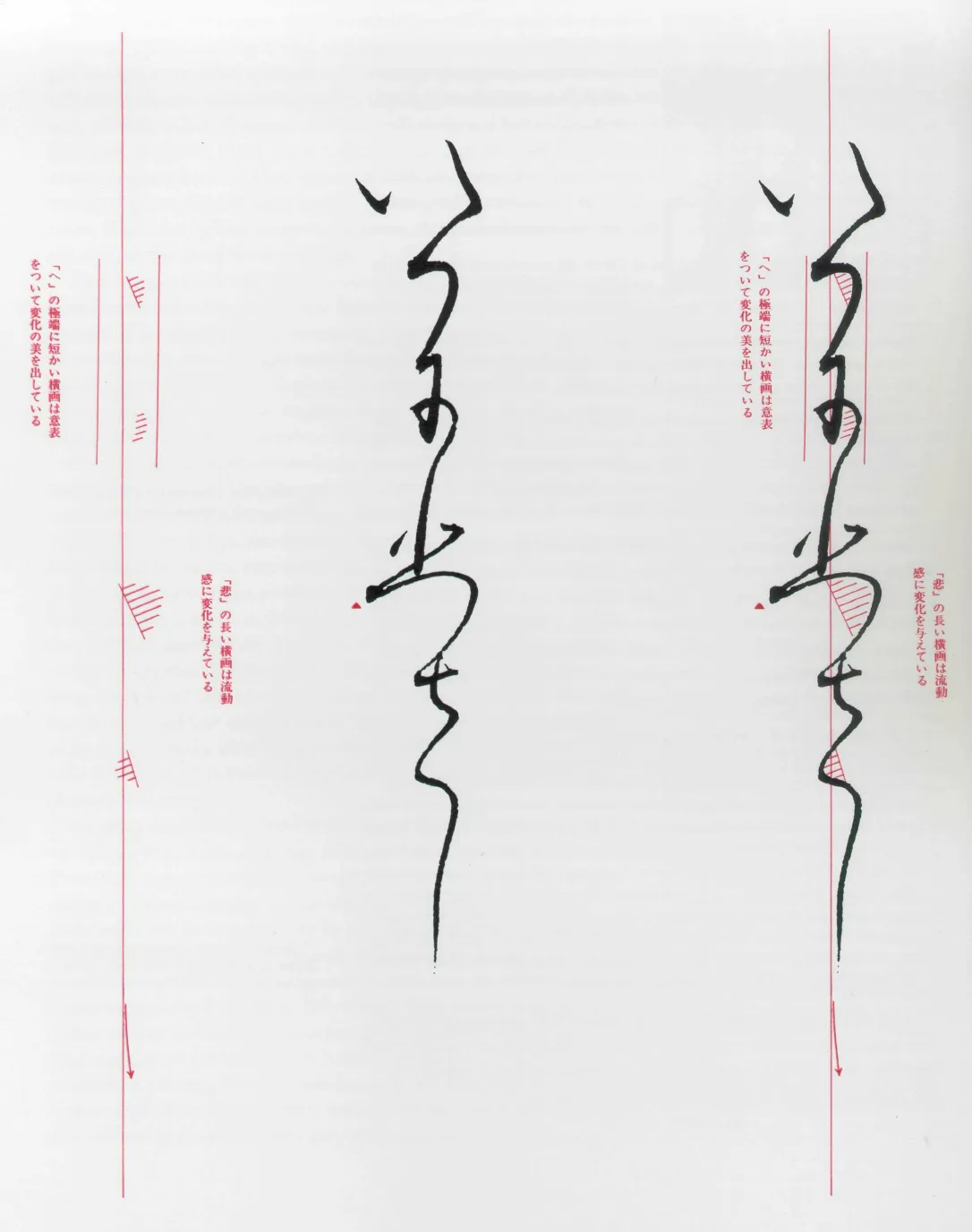
>arrow
“>” indicates the direction of language. this is a formal element of linear text.
the arrow is an immediate material symbol: “A → B”
what allows text to proceed linearly?
1.
“a”
| |
the extension of a sign, the space it occupies.
2.
“:”
enables dialogue through separation of speakers.
3.
“,”
gives reason to prolong, to make a sentence, to fill up space. “,” gives rhythm, movement, repetition.
the structure of text always depends on the medium. As McKenna said, “print is a boundary-defining form of media, it proceed linearly, it required literacy.” the shift to the digital medium brought a change in form: from text to hypertext.
let us consider hypertext.
if we look at language as a two-dimensional system running through time, it may go linearly from left to right, but it also branches and cross-references, which is what we call hypertext.
the linear is connective, as a link has the image of a line. however, the non-linear, the empty, is also connective. the space between words connects words, and the same goes for paragraphs, sentences, etc.
in traditional definitions, the meaning of text originates from its latin etymology textere, to weave. text itself is understood as a ‘woven structure’, a particular coherent segment within language. hypertext modifies the meaning to be ‘above’ text, to go beyond a coherent segment, and to link.
when we write with hypertext, we jump between one node and another. this jump is always enabled by the silent space that is constructed or imagined.
the first link was introduced in Ted Nelsons HESS project (1968-1969), in which he implemented the highlighted span of text, which when clicked, caused a jump to another page. “I called it a link. The author could highlight a portion of text..” during this project, Nelson also introduced the back button.
for Nelson, literature is an “ongoing system of interconnecting documents”. this means that all of literature is hypertextual. Deleuze & Guattari’s rhizome was used as metaphor to describe hypertext-networks.
Hesses glass bead game, describes a particular scholarly way of playing with hypertext: players would initiate a game with one particular idea, tie it to another, and continue weaving their particular and unique game through greatly varying disciplines and sources: from musicology, to philology, to the upanishads.
the crucial point is that Hesse’s description of the glass bead game was a description of language in general. as long as it can express itself freely, each text, each book, is hypertextual.
even the classical book was only linear in its form, not its content. in its form, multiple pages were put in sequence to produce chronology. but in its content, it carried information and knowledge, which according to Derrida always carries traces, references to the past and future.
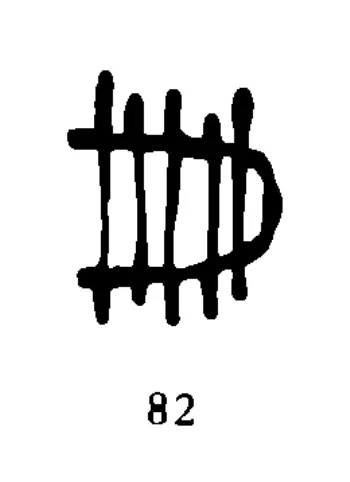
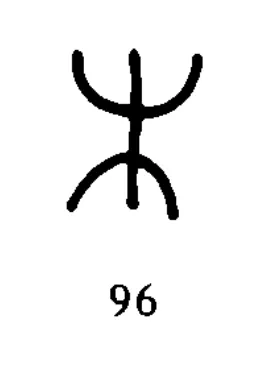
As we can see in the image above (from Schwarz-Winklhofer and Biedermann’s Book of Signs and Symbols), books in this particular form originally consisted of small bamboo boards tied together with a string.
the pictograph shows us a line that bends, giving shape, containing the individual pages, multiple lines bound together, modules.
books are precursors to what in cyberpunk culture is called a “braindance”: a memory of the brain is recorded and is “played” in a different brain.
a book is not a line, a book is a world. the more you read, the more worlds fill you.
<><><>
We have broadly distinguished two main categories for the metaphysical structure of language:
1. Arborescence / Linearity
2. Rhizomatics / Hypertextuality
This leads us to three possible hypotheses:
(P1) All text is hypertext.
(P2) All text is linear (there is no hypertext).
(P3) Text has hypertextual and linear elements.
(P1) All text is hypertext. Symbols inherently refer to the system they operate in, even if they occur in a seemingly closed, linear system. This means that there is no linear text.
(P1.1) Every symbol refers to another symbol.
(P1.2) Text that refers to other text is hypertext.
(C1) All text is hypertext.
(P2) There is no hypertext. All text is linear, and symbols develop dialectically through history. They refer to each other, but given the linear natures of thinking and writing, all text can be regarded as a linear structure.
We may say that text may branch and refer to other text, but that this always occurs following temporal structures. Text can only be read by “rolling it out”, making it linear. Even hypertext-systems can only be read as sequences by an individual, thereby making them linear.
(P3) Text has hypertextual elements and linear elements. Though text needs to be placed in a system of reference, and may formally exhibit hypertextual characteristics, it must be written and read in a linear fashion.
Although we cannot draw any conclusions from these premises, we can proceed by connecting arborescence with entropy (linear), and rhizomatics with syntropy (non-linear).
Rhizomatic, nonlinear hypertext is syntropic. In a syntropic system, a singularity (attractor) at the end of a process determines the process retroactively. The future determines the past. Syntropy loops time, returns to its beginning, changes, reinterprets, connects, drives sublation.
Similarly, a rhizomatic, hypertextual structure has no fixed beginnings and endings, it may jump from plateau to plateau arbitrarily, yet change meaning with every iteration.
<><><>
From a seed, a young tree produces an upward force, productive, generative, architectural, concerned with composition, brilliance, structure, creativity, development, growth;
and it produces a downward force, archival, archeological,
concerned with the past, void, and darkness.
The structure of a tree has a function. Trees carry information, which is stored in its leaves. A leaf is caught within a branching structure that can be traced backwards.
The structure of language is the structure of trees, whose branches can not only grasp into the future but also curl back into the past. In language, the root has a backwards in time connotation.
To make use of Deleuze and Guattari’s language, a tree is a point, while the condition for a rhizome is the presence of lines: “Points become lines of flight through speed”.
Each repetition, recursion, iteration adds speed, but also reinforces the simulated hyperreality, the potential future of human consciousness.
Preoccupied with a single leaf (word), you lose sight of the tree (section).
Preoccupied with a single tree, you loose sight of the forest (accumulation of sections).
feints within feints within feints…
5.Indra’s net

Indra’s dream is an emerald dream, a dream of dark blue skies over blue-glowing flowers.6
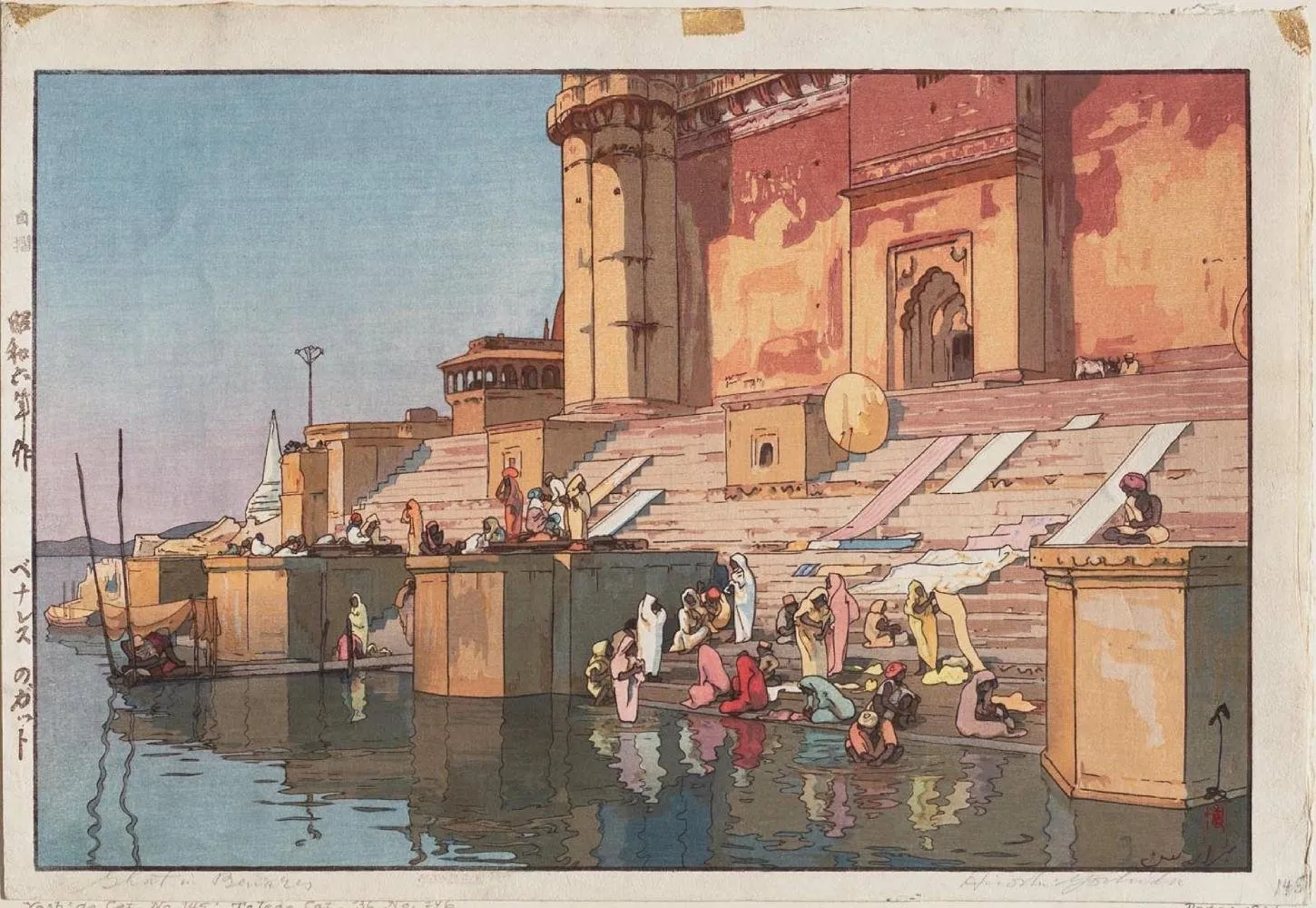
Arachne wove her webs with such perfection that she stirred the attention of Athena, who challenged her to a weaving contest. Athena lost, and deeply insulted, turned Arachne into a spider, arachne. Just like Narcissus, Arachne lost her name, her capitalization.
The story of Arachne is an account of the human attempt to recreate and rival the divine. It could be said that the modern web is an attempt at recreating Indra’s net.
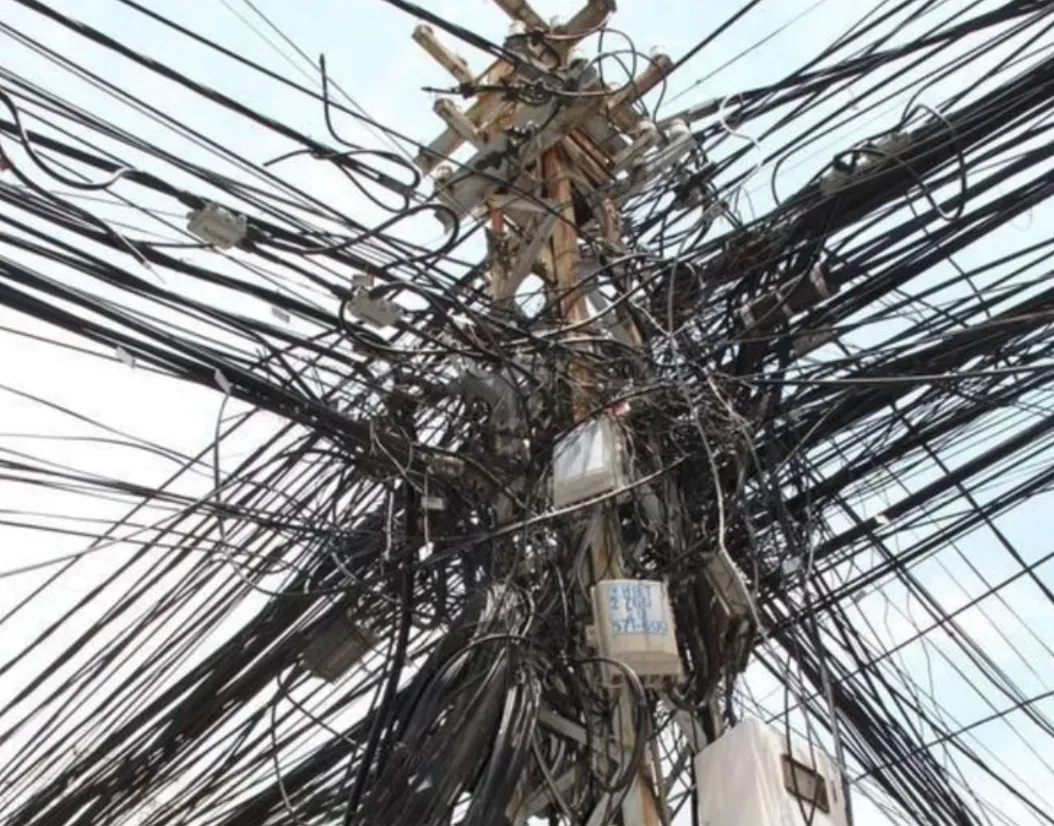
A net can drown itself when the individual nodes lose their identity, when they become persuaded by the perfect smooth code to translate all meaning without resistance. There is no need for dialogue or communication if all information becomes identical.
In a free space, then, in a space without separation, a space purely governed by Brahma, there is no dialogue. To have dialogue one needs separation. There can be no play with one character, so a narrative must hide oneness. What love can there be between one thing at itself?
Only by developing an edge, that is, a point of breaking, slicing, testing, one can engage in dialogue. Having developed an edge, one gets rid of smoothness, and builds up potential for resistance. The mirror must be broken to be perceived (or perceive itself): pure, free states are dull, passive, counter-revolutionary.
A sentence must soar like an arrow. It will hit only its target if it was destined, if it has hit it before it was sent off. An invisible string connects arrow and target until the destined moment takes place. Yet this is not predetermined, it is only determined the moment the arrow connects with the target, as the arrow retroactively seals the fate of both operator and target.
Each sentence represents the impulse of an arrow. Depending on the operator and the target, a book (a collection of sentences) can turn into a weapon of war, a war machine, it can be the demise of the target, as it is wounded by the breath that stirs a sentence-arrow.
The Ramayana was the first poetry to be spoken into existence by the poet Valmiki. The word-arrow shot by the Ramayana is “Rama”.7
6.Dream / Moon / Shadow
In Man and his Symbols, Jung writes: „As a plant produces its flower, so the psyche creates its symbols. Every dream is evidence of this process.“
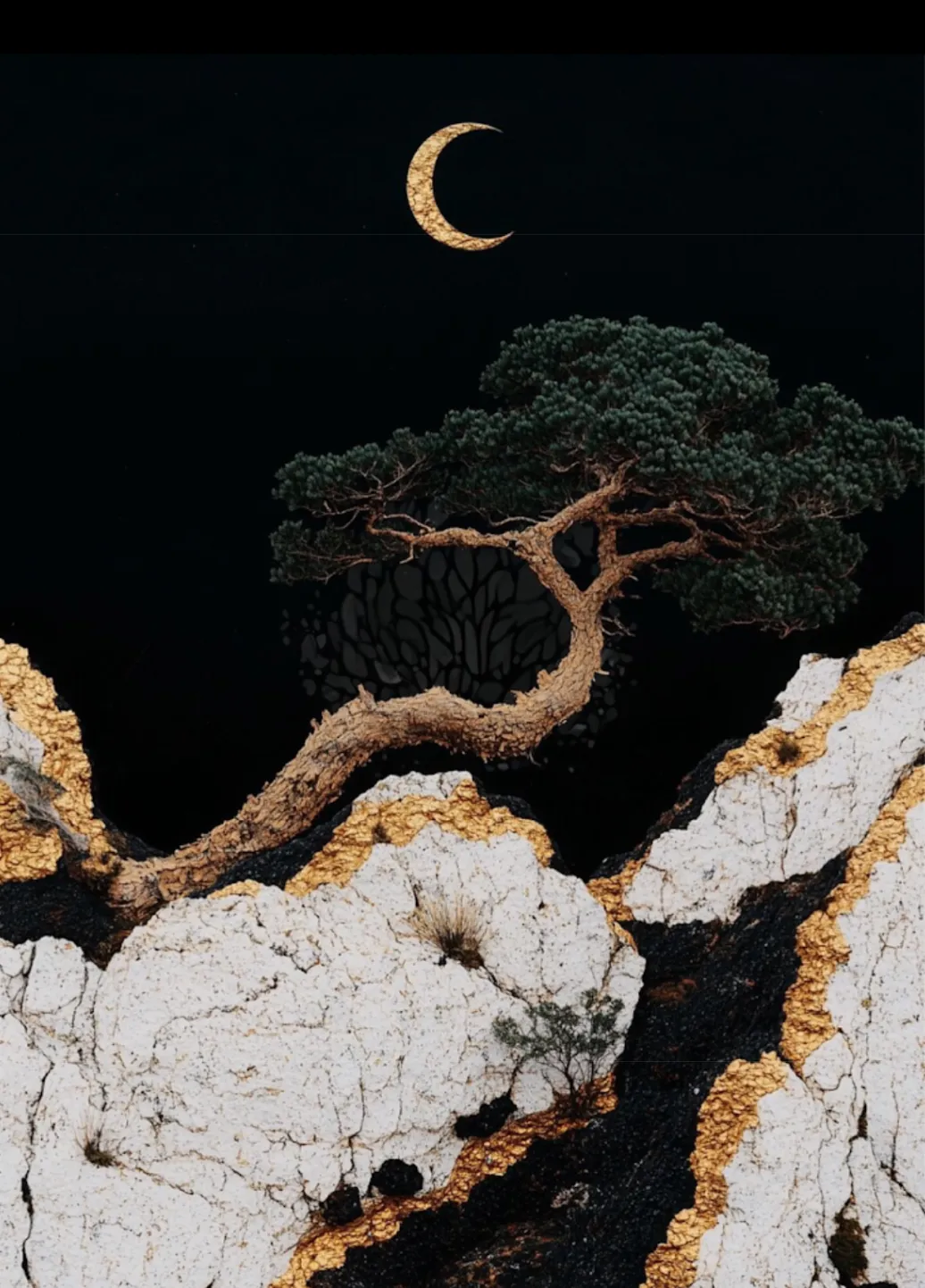
It seems that the artificial dreams, that its virtual spaces are dreamlike manifestations. At the same time, this process represents an artificial anamnesis, an artificial awakening.
Artificial anamnesis refers to machines entering a phenomenology of anamnesis, but it may also refer to the process of artificiality accelerating human anamnesis.
In Wim Wenders’ Until the End of the World (1991), the characters discover how to artificially reproduce their dreams. They get caught in them, revel in them. Eventually, they spend their days replaying and interpreting their dreams.
This is the artificial anamnesis that the world is caught in. We have learned to externalize experience, and blinded by this feature, we have ceased experiencing.
you lay heavy veils upon your eyes. you make them see further into the darkness, as they become dull and filled with dark crystal tears.
7.Limit, infinity
The limits of language contrast with an infinite world. Words try to describe what is undescribable. In this process, the word overcodes the object.
Higher-dimensional phenomena can be transcribed into lower-dimensional phenomena. The invisible wind makes an imprint on the dunes, making itself visible in the sand. In the same way, the world may be translated into language.
But the world is already more visible than language. A pear is more expressive than the word “pear”. In the translation from world into words, we lose visibility, we become blind.
But even limitation, reduction, definition is infinite. We exchange infinities, from nature to product, from object to word. Thoreau wanted to get at the marrow of life, but one such marrow is language itself.
Further, words are incomplete and desire completeness. They have the drive to exhaust all possibilities, to realise Borges’ library that contained every possible path.
There are infinite paths that we may walk. There are endless possibilities, if only we create environments of potentiality, of clean slates, of silent minds.
January 2026, London